

Is Ikos Dassia the right Ikos resort for your family?
You'e been doing what every parent does before booking a family holiday.
Scrolling through endless photos that all look the same.
Reading reviews from families whose kids are nothing like yours.
Jumping between resorts, trying to work out which one actually fits — and getting more confused the deeper you go.
And now you're stuck on that final, slightly terrifying question:
Is this the one that'll actually work for us?

Because here's the thing nobody tells you: all these resorts look identical online.
It's only when you'e standing there — kids in tow, bags unpacked, first dinner booked
— that you find out whether the beach is actually useable with a toddler, whether the
layout makes life easier or harder, and whether you've just spent several thousand
pounds on a week of logistics in the sun.
So let's cut through the brochure speak and figure out if Ikos Dassia is genuinely right
for your family.

What Ikos Dassia actually is

Ikos Dassia is one of two Ikos resorts on the island of Corfu (the other is Ikos Odisia, just
across the bay).
It opened in 2018, so it's well established — the team know what they're doing, the
systems work, and there's none of that "still bedding in" feel you sometimes get at
newer resorts.
It sits on Corfu's east coast, about 25 minutes from the airport, and stretches across a
gently curving bay with views to the Greek mainland.
The resort has 400 rooms spread across two main buildings — Sea and Sky — each
with their own restaurants, pools and bars, all within easy reach of the beach.
Like all Ikos properties, it offers a polished, all-inclusive experience with standout food
and drink, kids' clubs, beachfront access, and thoughtful extras like a day's hire of an
electric MINI or dinner out at a local taverna.
But what does that actually look like when you're travelling with children?
How does Dassia compare to the other Ikos options — especially Odisia next door?
And will it make life genuinely easier when you arrive with suncream, snacks and nap
schedules in the mix?
That's what this guide is here to help you figure out.

What works really well at Ikos Dassia
The beach is one of the best in the Ikos portfolio for little ones.
Long, gently shelving sand. Calm, shallow water that stays safe for ages. No steep drop-
offs or big waves.
It's the sort of beach where you can actually relax instead of hovering nervously at the
water's edge.
It's easy to get around.
The whole resort is flat and buggy-friendly. Paths are wide, lifts work, and you're never
trekking across the site just to get to breakfast.
That matters more than you'd think when you're doing it three times a day with tired
children.
The team know what they're doing.
Dassia's been open since 2018, so the staff are experienced and the systems are
smooth. You're not dealing with teething problems or a team still learning the ropes.
Corfu is beautiful — and there's plenty to explore if you want to.
It's green, scenic, and full of history. Corfu Old Town is 30 minutes away, and there are
beaches, villages and day trips that slot easily into a family holiday.
But you don't have to go anywhere — the resort works perfectly well if you never leave.
The food is excellent.
Genuinely good quality, plenty of variety, and staff who actually care whether your
children are happy. Mealtimes feel like a break, not a battle.
What might not suit everyone
Corfu's weather is less reliable early and late season.
It's greener and more humid than somewhere like Crete or the Costa del Sol — because
it rains more in winter. That means April and October can be a bit of a gamble. Some
years are glorious. Others are cooler and wetter.
If guaranteed sunshine matters to you, resorts like Ikos Kissamos (Crete) or Ikos
Andalusia (Spain) are safer bets in early and late season.
It's one of the older Ikos resorts.
Dassia's lovely, but it doesn't have that brand-new, ultra-modern feel. If sleek, design-
led architecture is important to you, Odisia (opened 2023) might be more your thing.
The à la carte restaurants lean heavily Greek.
That's brilliant if you love Greek food. Less so if you were hoping for more international
variety. Other Ikos resorts have a wider spread of cuisines — Dassia's selection is
excellent, but more focused.
No Deluxe-only restaurant.
Unlike some other Ikos resorts, Dassia doesn't have a Deluxe-exclusive fine-dining
venue like Seasons.
If you're paying for Deluxe and food is a big part of your holiday, that's worth knowing.
So what does that mean for you?
Ikos Dassia works brilliantly if you want a well-run, easy-to-navigate resort with a
fantastic beach, great food, and a calm, relaxed feel.
It's especially good for families with younger children who need shallow water, flat
paths, and a team who know what they're doing.
It's less ideal if you want cutting-edge design, guaranteed sunshine in April or October,
or a huge variety of international cuisines.
But here's what really matters: does it fit the way your family holidays?
That's what the rest of this guide is here to help you work out.

Ikos Dassia in context

Location, layout and how the resort works with real-life family logistics
Ikos Dassia sits on Corfu's eastern coast, around a 25-minute drive from the airport and
just 30 or so minutes from Corfu Old Town.
It's beachfront, but not remote — so you've got easy access to shops, towns and things
to explore if you feel like stepping out.
The resort covers 25 acres and is split between two main buildings — Sea and Sky —
each with their own entrance, restaurants, pools and bar areas.
That means wherever you stay, you're never far from anything — useful if you've got
tired legs, pushchairs or hungry children in tow.
Paths between buildings are wide and flat. Everything is buggy-friendly.
Getting around is straightforward even at peak times. The whole place has a compact,
well-managed feel that families tend to appreciate.
The beach runs the full length of the resort and has a calm, easy-going atmosphere.
The sea here is shallow, clear and usually still — great for younger swimmers or
sandcastle builders.
Deluxe Collection guests get a quieter stretch of beach with more spaced-out loungers,
but even the main area feels well run and uncrowded.
Dassia is big enough to offer variety, but not so large that it becomes effortful to get
anywhere. That balance often ends up being one of the things families like most.
Next, let's look at how the timing of your holiday affects what it's like to stay here.

When to visit Ikos Dassia

How the season shapes your days — from sunshine and swimming to booking pressure
The resort runs from April through to the end of October, and honestly? The month you
pick changes everything.
Not just the weather — though that's obviously part of it — but the vibe , how easy it is
to get into restaurants, whether you're fighting for kids' club slots, and frankly, how
much you'll pay.
Here's what each window actually feels like on the ground:
April and early May
This is shoulder season — and it shows.
You'll get sunshine and those lovely spring temperatures (high teens to low 20s), but the
sea's still cold.
Some of the outdoor pools are heated, which helps, and there are family splash times in
the heated spa pool if your kids are keen.
But, if your children live in the water, this might feel limiting.
The beach is quiet — which is lovely — but you're not getting that full-on swim-all-day
holiday.
Who it suits: Families with babies or toddlers who aren't bothered about swimming.
You get space, lower prices, and a gentler pace. It's also brilliant if you want to explore
Corfu without melting.
Late May and June
If you can swing it outside school holidays, this is the sweet spot.
Warm but not brutal (low- to mid-20s), long sunny days, and the pools are properly
swim-friendly.
The resort feels lively without being rammed, and you can usually book restaurants and
kids' club without military-level planning.
I've spoken to families who went in early June and said it felt like they'd cracked some
kind of code — great weather, happy kids, no stress.
Who it suits: Anyone with flexible dates. Especially families with pre-schoolers or those
who can pull kids out for a week.
July and August
Right. Peak season. Let's be honest about what that means.
It's hot — high 20s or low 30s most days. The pools and sea are perfect for swimming,
but you'll be thinking about shade, sun cream, and timing everything around the
midday heat.
The resort is fully booked. Every restaurant, every kids' club session, every sun lounger
— it's all in play.
You'll need to book your à la carte dinners as soon as you can (ideally before you travel),
and kids' club slots go fast.
Does that make it a bad time to go? Not necessarily.
The atmosphere is buzzing, your kids will meet loads of other children, and if you're
organised, it all works.
But if you're the kind of person who likes to wing it or hates feeling like you're on a
schedule, this might wind you up.
Who it suits: Families tied to school holidays who want guaranteed sunshine and don't
mind a bit of advance planning.
September and October
September is one of those months returning families rave about.
The weather's still warm — often high 20s — and the sea's actually warmer than it was
in June because it's had all summer to heat up.
The resort empties out a bit after the school rush, so you get more space, easier
bookings, and a calmer vibe overall.
It's also when you'll meet a lot of families who've been before and specifically choose
September because they know.
October half term is more of a roll of the dice.
Some years it's glorious — 25 degrees and sunny. Other years you'll get wind, clouds, or
rain.
A few families I've spoken to who went late October said parts of the resort felt like they
were winding down — some restaurants on reduced hours, that sort of thing.
Who it suits: September is ideal for almost everyone, especially if you want a high-
quality holiday without the peak-season intensity. October works if you're willing to
gamble a bit on weather.
So when should you go?
Here's the short version:
-
Want warm weather without the chaos? Late May, June or September.
-
Tied to school holidays? July and August are fine — just go in expecting to plan
ahead and pay more.
-
Got a baby and don't need hot swimming weather? April and May offer great
value and breathing space.
-
Want the best of everything? Early to mid-September. Warm sea, warm air,
fewer people, easier logistics.
If you're still not sure which window fits your family best, drop me a line. I can talk you
through what each month actually feels like with kids in tow — and what you're likely to
pay for your dates.
Rooms at Ikos Dassia

How the different room types actually work for families
The rooms at Ikos Dassia all look gorgeous in the photos.
But the difference between a Junior Suite and a One-Bedroom Suite? That's the
difference between whispering in the dark after your toddler's asleep… and actually
having an evening to yourself.
Layout matters. Bathrooms matter. And the size of your room shapes how the whole
week feels — especially when you're managing naps, early bedtimes or just need
somewhere to hide for ten minutes.
So let&'s cut through the brochure speak and talk about what each room type is actually
like when you're living in it with kids.
Double and Superior Double Rooms (25 sqm)
These are the entry-level rooms, and they're lovely — if you're a couple.
With a baby in a cot? Still fine. Cosy, but workable.
But the moment your child needs their own bed, you need to upgrade.
There's no separate space. No bath (just a walk-in shower).
And once your kid's asleep, you're either sitting on the balcony or you're stuck
whispering and scrolling your phone in the dark.
Who it suits: Parents with a baby who's happy in a cot and doesn't need a bath.
Who it doesn't: Anyone with a toddler or older child who needs their own bed.
Junior Suites and Panorama Junior Suites (35 sqm)
A step up in size, and you get a sofa bed in the same room as the double bed.
If you've got one child and genuinely don't mind everyone sleeping in the same space,
these work.
The Panorama versions guarantee a sea view and sometimes come with a private
garden, which is a nice touch.
But here's what catches people out: it's still open-plan.
So once your child's down for the night, you'e back to the same problem — no evening,
no privacy, no space to decompress.
And still no bath. Just a shower.
Who it suits: Families with one child who go to bed at the same time as their kids, or
who are happy spending evenings on the balcony.
Who it doesn't: Anyone who values having an evening to themselves. Or anyone with a
toddler who needs a bath before bed.
One-Bedroom Suites (58 sqm)
This is where things start to make sense for most families.
You've got a proper bedroom for the adults, and a separate living area with sofa beds
for up to two kids.
There's a sliding door between them, which means nap times work, bedtimes work, and
— crucially — you get your evenings back.
These suites also have a bath and a shower, which is one of those small things that ends
up mattering alot more than you'd think.
A lot of families tell me this is the sweet spot — big enough to breathe, separated
enough to function, and not so huge that you're rattling around in it.
Who it suits: Most families. Especially those with younger kids who need baths, naps,
and early bedtimes.
Who it doesn't: If you've got teenagers who want total independence, you’ll need to
look at the Family Rooms or Two-Bedroom Suites instead.
Family Rooms (50 sqm)
These are essentially two Double Rooms connected by an internal door.
So: two bedrooms, two bathrooms, two balconies.
On paper, that sounds great. And for older kids or teens who want their own space, it
works really well.
But here's what I've heard from families with younger children: the layout can feel a bit
disjointed.
You're in one room, they're in another, and it doesn't flow as easily as a One ot two-
Bedroom Suite where everyone's kind of… together but separate.
Who it suits: Families with older kids (12+) or teens.
Who it doesn't: Families with toddlers or younger children who need you nearby at
night.
Deluxe Junior Suite with Private Garden, Deluxe Bungalow Suite, Deluxe Junior
Suite Bungalow with Private Pool (35–37 sqm)
If you're considering Deluxe, these are the entry-level options.
The layout is similar to the standard Junior Suites — open-plan, sofa bed in the same
room — but you’ll get a quieter spot in the resort, a guaranteed private garden, or a
garden and your very own 28 sqm private pool.
And here's where the garden makes a real difference: if you've got an early riser, you
can take them outside to play at 6am without waking everyone else up or leaving the
room.
Families who've stayed in these say the garden gets used much more than they
expected — breakfast outside, quiet time, somewhere for the kids to burn off energy
before dinner.
Who it suits: Families with one child who want the perks of Deluxe but don't need a
separate bedroom.
Who it doesn't: Same as the standard Junior Suites — if you need an evening to
yourself or a bath, look elsewhere.
Deluxe One-Bedroom Suites Private Garden and Deluxe One-Bedroom Suites
Private Pool (58 sqm)
Same layout as the standard One-Bedroom Suites — separate bedroom, living area with
sofa beds, sliding door between them — but with Deluxe perks.
That means quieter locations, sea views, private gardens (or a private garden with 40
sqm private pool), and access to the Deluxe pool and beach.
You still get the bath and walk-in shower, which is brilliant with younger kids.
They accommodate 2 adults and up to 3 kids.
This is the room type I'd probably pick if I was going with my own family and wanted to
feel properly looked after without going full villa mode.
Who it suits: Bigger families (up to three kids) who want space, separation and a bit of
extra calm.
Who it doesn't: If you're on a tighter budget and happy with the standard One-
Bedroom Suite, the Deluxe version is lovely but not essential.
Deluxe Two-Bedroom Suite, Deluxe 2-Bedroom Suite Private Pool Beachfront and
Deluxe Two Bedroom Bungalow Suite Private Pool Beachfront (100–120 sqm)
Now we're talking serious space.
Two proper bedrooms, each with their own en suite (one with a bath and shower, the
other shower-only), plus a big lounge and a large balcony (Deluxe Two-Bedroom Suite)
or beachfront garden and private pool (the other 2 versions.)
This setup is brilliant for larger families, or when grandparents are coming along and
everyone needs a bit of breathing room, as these can accommodate up to 6 of you, 7
for the Bungalow version.
It's also where Deluxe becomes automatic — there’s no ‘non-deluxe’ version of this type
of room.
Who it suits: Bigger families, multi-generational trips, or anyone who just wants loads
of space.
Who it doesn't: If it's just you, your partner, and one or two kids, you probably don't
need this much room. Save your money.
Deluxe Three-Bedroom Villa with Private Pool (170 sqm)
The top of the range.
Your own pool. Your own lawn. Your own deck. Sleeps up to seven, spread over two
floors.
All three bedrooms have en suites — but here's the catch: they're all shower-only. No
baths. Which is fine for older kids, but worth knowing if you've got little ones who need
a bath before bed.
Otherwise, this is as close as you'll get to a private villa experience while still having full
access to the resort.
Who it suits: Families who want total privacy and space, or groups travelling together.
Who it doesn't: If you're paying for this and not using the pool or garden much, you're
probably overspending.
A few things families wish they'd known
If having a bath matters, you need a One-Bedroom Suite or bigger. Below that, it's
shower-only. And if you've got a toddler who won't settle without a bath, that's going to
be a problem.
Room location makes a difference. Rooms near the Sea building's lobby or bar areas
can pick up noise in the evenings — not loud, but enough to matter if you're a light
sleeper or have a child who wakes easily.
Gardens and private pools get used more than you'd think. Especially with early
risers. If your kid's up at 6am, having somewhere to go that isn't the main pool area is
gold. Invest in as much space (inside and out) as you can afford.
Still not sure which room is right for you?
I get it. It's confusing. And the last thing you want is to spend a week in a room that doesn't
quite work.
So if you want help working out which layout suits your family — based on your kids' ages,
how you actually holiday, and what you're willing to spend — just get in touch.
I can usually narrow it down in about five minutes.
Facilities at Ikos Dassia

What you'll actually use, how it flows day to day, and why layout matters
Here's what makes or breaks a family holiday: not whether the resort has stuff — but
whether using it feels easy or like hard work.
At Ikos Dassia, it';s the former. And that's not by accident.
The layout is smart. The facilities are spread out but never far. And the whole place
just… flows.
You're not spending half your day walking, queuing, or trying to work out where
anything is.
Let me walk you through what's actually there — and what it's like to use it with kids in
tow.
Pools
There are pools dotted across both the Sea and Sky buildings, so you're never more
than a couple of minutes from somewhere to swim.
Most are family-friendly, with shallow areas or separate splash sections for little ones.
Then you've got the adults-only pools and the Deluxe Collection pool, which are quieter
and more peaceful if you manage to sneak away.
Here's something worth knowing: some of the outdoor pools are heated at the
beginning and end of the season — mainly April, May and October — but not all of
them.
If you're travelling with children who won't go near cold water, you'll probably end up
using the indoor pool more in those months.
One of the heated spa pools has designated splash times for children (8am to 4pm at
the Sea Spa), which helps make the cooler months feel more manageable.
In high summer, the pools are brilliant — warm, busy but not rammed, and there's
always somewhere to sit nearby.
Kids Clubs (at a glance)
Ikos Dassia has strong childcare provision — and I mean properly strong, not just "
got a room with some toys in it".
There's a crèche for babies and toddlers (6 months to 4 years), a kids club for ages
4–12, and a light-touch teens programme for 12+.
The crèche is paid — €32 for the shorter afternoon session, €42 for the longer morning
and late afternoon slots — and you need to book it early.
It fills fast in school holidays, and I mean fast. If you're relying on it, book before you
arrive.
The kids' club is free and runs three sessions a day, packed with games, crafts, pool
time and outdoor fun. Most kids love it. And most parents are surprised by how much
their children want to go back.
Teens (12+) get more flexible activities — usually sport and social stuff around the
resort. It's not heavily structured, which suits some teens perfectly and leaves others a
bit underwhelmed. Depends on your child.
From 2025, there's also a Heroes Supper Club running from 7pm to 10pm, where kids
eat and play whilst parents head off to dinner. It's paid (€30), but families say it's worth
every penny for a proper evening off.
There's also a Football Academy (€20–€25 per session) for ages 4–14, which runs six
mornings a week and is one of those things kids ask to do every single day. Professional
coaches, small groups and genuinely good fun.
Babysitting
In-room babysitting is available from €15 per hour, with a €15 supplement after 11pm.
This is one of those things families wish they'd known about earlier — because being
able to go to dinner and actually finish a conversation, or just have some time off duty,
makes a massive difference.
Adult-Only Areas and Spa Time
When you do get time to yourself — whether the kids are in club, napping, or being
looked after — there are proper adult spaces to retreat to.
There are adults-only pools and bar areas in both the Sea and Sky buildings. They're
calm without feeling exclusive or stuffy. Just… quieter.
The spas (one in each building) are free to use for all adults.
You get a sauna, steam room, indoor pool and treatment rooms. It's open from 8am to
8pm, and robes, slippers and lockers are all provided.
Treatments are extra — massages, facials and rituals using Anne Semonin products —
and they're worth booking early if you're going in peak season. Otherwise you'll find all
the decent slots are gone.
There's also a fitness studio and gym, with a full programme of classes including yoga,
Pilates and aqua aerobics. Some parents use it. Most don't. But it's there if you want it.
The Layout
Here's what really helps Ikos Dassia work so well: the layout.
The resort is spread across 25 acres, but it never feels vast.
Sea and Sky are distinct buildings, each with their own pools, bars, restaurants and
entrances — but they're close. You're not trekking across the site to get anywhere.
Everything is accessible with a buggy. Paths are wide and well maintained. Lift access in
both buildings makes upper floors usable even with young children or if you're lugging
beach bags and tired toddlers.
The resort absorbs families well. There's space to breathe, and things don't feel
funnelled into one place. You'e not all queuing for the same pool, the same restaurant,
or the same patch of shade.
It's one of those things you don't really notice until you've stayed somewhere badly
designed — and then you realise how much easier this makes everything.
How it all comes together
What families tend to notice — often without realising it — is how smooth it all feels.
There aren't long waits for loungers, towels, food or shade. Staff help without hovering.
And you're rarely making trade-offs just to get through the day.
You can move from your room to breakfast, to the pool, to lunch, to the beach and back
— without needing to overthink any of it.
That might sound like a small thing. But when you're juggling naps, suncream and snack
supplies, it's often the difference between a holiday that works… and one that feels like
a week of logistics in the sun.
Next: restaurants and bars — and why mealtimes here tend to be easier and more
enjoyable than most families expect.
Restaurants & Bars at Ikos Dassia

How easy it feels to eat well — with or without tired children in tow
One of the big questions for families is always about food: will mealtimes feel like a
pleasure, or another thing to manage?
At Ikos Dassia, this is often where families end up being most surprised — in a good
way.
Food isn't just passable here. It's genuinely good — in both quality and variety — and
there's a strong sense that families are expected, welcomed, and catered for.
Not tolerated in the corner whilst the grown-ups get on with it!
The basics
There are eight restaurants at Ikos Dassia, spread across the Sea and Sky buildings.
You'll find a mix of Greek, Italian, French, Corfiot, Asian and Mediterranean options, plus
a main buffet and a stylish grill.
All restaurants have children's menus, highchairs, and staff who know how to read the
room — whether your child is happily exploring new flavours or needs plain pasta
immediately.
If you're travelling with a baby, the kitchen teams are happy to make fresh baby food to
order. It's little things like that which make life feel easier.
Booking your meals
Each à la carte restaurant requires a reservation for dinner.
Standard guests can pre-book three dinners before arrival. Deluxe guests can pre-book
all dinners, including additional nights at the à la cartes.
Breakfast and lunch are much more flexible — some restaurants are open for walk-ins,
whilst the buffet (Flavors) is always available.
Families often say that even in busy periods, they managed to eat where they wanted —
as long as they were a bit flexible with times.
But if you're going in July or August, it's definitely worth booking as soon as you can.
Those slots go fast, and you don't want to spend the first day scrambling for tables.
A quick guide to the restaurants
Ouzo – Greek classics with a modern twist, right on the beachfront. Open for breakfast,
lunch and dinner. Calm, romantic in the evenings, and surprisingly good for a laid-back
lunch with sand still on your feet.
Fresco – Elegant Italian, curated by Michelin-starred chef Ettore Botrini. Big glass
windows, smart interiors, and a few standout dishes families come back for. Open for
all three meals.
Anaya – Asian flavours from Thailand, China and India. Dinner only, and feels more
grown-up. Good if your children enjoy bold flavours or if you're having a parents-only
dinner.
Kerkyra – Focused on local Corfiot cuisine, with some really fresh seafood and Greek
wines. Beachfront again. A lovely spot for an early evening meal with the family.
Grill House – Open for breakfast and dinner. Big on skewers, grilled vegetables, and
open-air tables. Easygoing atmosphere and nice pool views.
Provence – French and elegant. Dinner only, and tends to suit older families or grown-
up meals.
Enoteca – Italian-Mediterranean bistro and wine bar. Adults-only at lunch. Good for a
quieter dinner or a long glass of wine with views.
Flavors – The main buffet. Open for all meals and used by everyone at some point —
especially on nights when the kids are too tired for a sit-down three-course meal.
Even families who eat mostly at the à la cartes tend to use the buffet more than
expected.
It's calm, spacious, has great sea views, and doesn't feel chaotic. You can be in and out
in under an hour, which is a gift some evenings.
What it's like eating out with kids
Here's what makes the difference:
Staff are brilliant with children — not just patient, but engaged. They'll chat to your
toddler, bring colouring stuff without being asked, and somehow know when to check in
and when to leave you alone.
The atmosphere is relaxed, even in the smarter restaurants. No one blinks if a child
gets noisy or tired. You're not getting side-eye from other tables. Everyone's in the same
boat.
The menus are thoughtful — lots of options that appeal to kids without being an
afterthought. And if your child wants something that's not on the menu, they'll make it.
There's plenty of space — no squeezing into tight corners or trying to make a buggy fit.
Tables are well spaced, and you're not sitting on top of other families.
Parents often say mealtimes here felt like a proper break, not a juggling act.
And being able to walk straight from your room to a beachfront table in ten minutes
helps more than you'd think.
Dine Out – Eating beyond the resort
Ikos Dassia includes a Dine Out programme, which lets you eat at selected local
restaurants at no extra cost.
Transfers are included, and the concierge helps you book it.
Families like it for a change of scene — especially if you're there for longer than a week.
It's a simple way to experience Corfu Old Town or a local taverna without it feeling like a
major expedition.
The following venues are currently available in Ikos Dassia's Dine Out programme:
Dora Fish Tavern – a laid-back seafood spot at the New Port of Corfu, about
10km from the resort
Agora Restaurant – serving Corfiot specialities at the Old Port of Corfu, around
14km away
Check with the concierge once you've booked to see what's on offer during your stay —
the list can change slightly year to year.
Bars (and what you'll actually use)
There are ten bars at Ikos Dassia, including lobby bars, pool bars, beach bars, and a
theatre bar.
You'll find quiet places for an evening drink and more social spots for live music or a
cocktail before bed.
Drinks are genuinely premium — proper spirits, decent wines, cocktails made with care
— and served all day.
There's even a wine bar if you're into your vintages, and staff are happy to recommend
pairings.
Families often comment on how nice it is to have a drink in the evening whilst their
children play safely nearby — either winding down from dinner or joining the low-key
entertainment.
There are also two gelaterias (one in each building) for a treat during the day, and
Deluxe guests get access to their own quieter bar area too.
Next, we'll look at what there is to do during the day — and what evenings usually look
like once the sun sets.
Entertainment & activities at Ikos Andalusia

What your days tend to look like — and how evenings usually unfold
Most days at Ikos Andalusia settle into an easy, flexible rhythm.
Families tend to spend a good chunk of time by the pools or on the beach, dip into
activities when it suits them, and then decide in the late afternoon whether the evening
is going to be lively, low-key or somewhere in between.
That flexibility is a big part of why it works so well for families. There’s plenty going on,
but nothing ever feels compulsory.
Daytime: as active (or relaxed) as you want it to be
If you like having things to dip into, there’s a lot included during the day.
You’ll find a full programme of included fitness classes — yoga, Pilates, stretching
sessions and aqua aerobics — alongside a well-equipped gym for anyone who prefers
to do their own thing.
Tennis courts are available, and sports like beach volleyball and table tennis are easy to
do without committing to a schedule.
Watersports such as paddleboarding, canoeing and pedaloes are included for short
daily sessions, which families like because you can fit them around naps, kids’ clubs or
meals rather than planning half a day around them.
Bikes are also included, and many families enjoy cycling part of the New Golden Mile
towards Estepona — a flat, scenic coastal route that feels manageable even with
younger children.
There are additional paid options — football, swimming and tennis academies for the
kids, private boat trips, jet skiing and waterskiing — but families tend to see these as
optional extras rather than essential parts of the holiday.
If your children are in the kids’ club (which I’ll cover properly next), this is when many
parents choose to book a class, spend time at the spa, or simply enjoy some
uninterrupted time by the pool or beach.
The beach: calm, well-serviced and very usable
The beach at Ikos Andalusia is a long stretch of sand mixed with pebbles, particularly
at the water’s edge.
Families consistently describe it as calm, spacious and well organised, with excellent
service directly to your sunbed.
The sea is usually gentle, which works well for children, but the stonier entry means
water shoes are a sensible addition, especially for younger ones. Many families either
bring them or pick them up locally.
Once you’re in, the water is clear and calm, and the whole area has a relaxed, breezy
feel, backed by the resort’s landscaped grounds and coastal boardwalk.
Beachside yoga sessions and watersports add a bit of structure for anyone who wants
it, but most families use the beach as a place to slow down.
Deluxe guests have access to a quieter, more spacious beach section, but families
staying in standard accommodation regularly say the main beach still works very well —
particularly because service, shade and spacing are well managed.
Time without the kids
When you do manage to carve out some child-free time, Ikos Andalusia gives you a few
good options.
The spa is adults-only (apart from specific family splash times in the indoor pool) and
includes a heated pool, sauna, steam room and relaxation areas. Treatments are extra,
but even a short visit to the thermal suite is often enough to reset your day.
There are also adults-only pools and quieter bar areas, which feel noticeably calmer
than the main family zones.
You won’t feel like you’ve stepped into a couples-only hotel, but the shift in atmosphere
is clear.
Evenings: sociable, flexible and family-friendly
Evenings at Ikos Andalusia are generally relaxed and sociable rather than showy.
There’s live music, shows, themed evenings and occasional beach parties, but
entertainment is spread across the resort rather than centred around one headline
venue. Families like that you can engage with as much or as little as you want.
Some nights you’ll watch a show. Other nights you’ll have a drink, let the kids wind down
and head back earlier. If your children don’t stay up late, you don’t feel like you’re
missing something essential.
Compared to quieter resorts like Aria, Andalusia does feel a little livelier in the
evenings, but it’s still very much pitched at families rather than late nights or high-
energy nightlife.
How it all comes together
What families tend to notice most isn’t one standout activity — it’s how smoothly
everything fits together.
Having space, choice and staff who anticipate what you need takes a lot of mental load
away. You’re still parenting, but you’re not constantly organising, queuing or planning
the next move.
Once you understand how days and evenings tend to flow here, the next big piece of
the puzzle is the kids’ clubs — what’s included, what’s paid for, and how they actually
work in practice for babies, toddlers, children and teens.
That’s where we’ll go next.
Kids clubs & childcare at Ikos Andalusia

How children are looked after — and how that changes your holiday
Ikos Andalusia does childcare extremely well, but it’s worth understanding how it
actually works day to day, rather than just skimming age brackets on a website.
For many families, this is the difference between feeling like they’re constantly
managing logistics — and feeling like they can properly switch off for parts of the day.
The crèche (6 months to 4 years)
This is a big reason families with babies and toddlers choose Ikos Andalusia.
The Heroes Crèche is professionally run by staff qualified in Early Years Education and
first aid, with structured indoor and outdoor activities designed around the age of the
children.
Sessions run three times a day (morning, early afternoon and late afternoon), which
gives you flexibility rather than locking you into full days.
Parents often say the same thing: the first drop-off can feel daunting, but confidence
comes quickly once you see how calm, capable and reassuring the team are.
Staff are used to nap schedules, unsettled moments and first-time separations — and
that experience shows.
The crèche is paid, costing around €32–€42 per session, depending on the length of
the session, and it does need booking in advance — particularly during school holidays
when sessions fill quickly.
Most families use it selectively — perhaps a morning session so they can relax properly,
book a spa treatment, or just sit somewhere quietly knowing their child is being well
cared for.
For many parents, especially on a first holiday with a baby, this is the thing that makes it
feel like a holiday rather than just parenting somewhere sunnier.
Kids Club (4–11 years)
Once children turn four, the Heroes Club becomes free, and this is where a lot of
families really start to feel the benefit.
The club runs three structured sessions per day and focuses on organised activities
rather than free-for-all childcare. Expect a mix of arts and crafts, group games, picnics,
pool games and themed activities, all led by professionally trained staff.
Families consistently say that children settle quickly, make friends fast and actively want
to go back — which matters more than any brochure description.
You’re rarely persuading children to attend; more often, you’re planning your day
around the sessions they’re excited about.
Sessions can fill up, especially in peak periods, so it’s sensible to book in advance once
you arrive.
Teens (12–17 years)
Teen provision at Ikos Andalusia is deliberately lighter-touch, and that works well for
most families.
The teen club runs during high season, with two daily sessions. Activities tend to focus
on sports and social interaction — things like beach volleyball, pool games and water-
based activities — without making teenagers feel over-managed.
It suits teens who want independence but still like having something organised to dip
into.
If your teenager needs constant structure, it may feel a little low-key, but for most it
strikes the right balance.
Evening childcare & babysitting
For evenings, you have a couple of useful options.
Private in-room babysitting is available at an additional cost and needs arranging in
advance, but families regularly mention how comfortable they feel using it.
It’s what allows for a quieter dinner, a longer meal, or simply some proper adult time
without watching the clock.
There’s also the Heroes Supper Club for children aged 4–12, where kids eat together
and take part in supervised evening activities while parents head out for dinner.
Families like this because it feels social and fun for the children, and they get an evening
out together on their own.
Next, it’s worth looking at the Deluxe Collection — what extra benefits it actually gives
you at Ikos Andalusia, and whether it’s worth the upgrade for your family.
Deluxe Collection at Ikos Andalusia
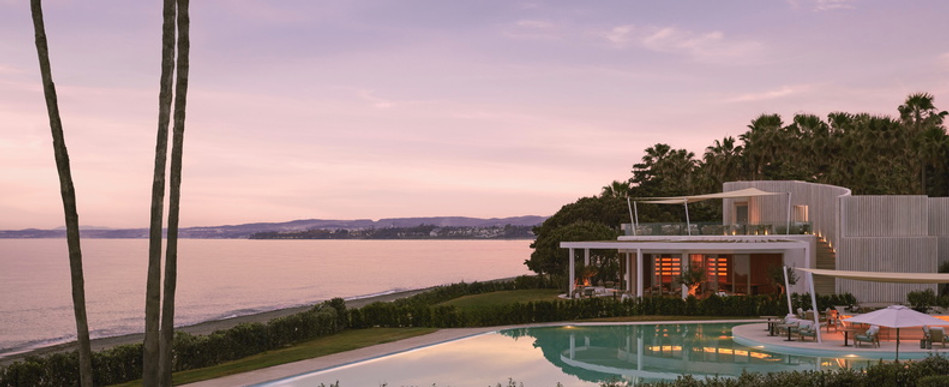
What it actually gives you — and how to decide if it’s worth it for your family
If you’ve never stayed at an Ikos resort before, the Deluxe Collection can feel a bit
confusing.
The standard Ikos experience is already very strong, so it’s not immediately obvious
what you’re paying extra for — or whether you’ll actually use the benefits enough to
justify the jump in price.
The first thing to understand is this: Deluxe isn’t an add-on. You can’t bolt it onto a
standard room.
The only way to get Deluxe benefits is to book a Deluxe Collection room, so the room
and the perks always come as a package. That’s why the Deluxe decision is really about
how you holiday, not just what the room looks like.
And crucially, the price difference for Deluxe isn’t fixed. It varies a lot depending on
dates, demand and room type — which is why families often have very different views
on whether it’s “worth it”.
A key point about rooms
If you’re considering a Junior Suite or a One Bedroom Suite — which are available in
both Deluxe and non-Deluxe — the decision is less about the room itself.
The Deluxe and non-Deluxe versions of these rooms are very similar in terms of layout,
space and comfort. You’re not paying for a dramatically better room.
What you’re really deciding is whether the additional Deluxe benefits — things like
guaranteed restaurant reservations, quieter spaces, concierge support and an easier
experience in peak periods — will genuinely improve your stay.
For lower room categories (like Superior Doubles), Deluxe isn’t an option anyway.
For higher categories (Two- and Three-Bedroom Suites and Villas), Deluxe is built in.
It’s this middle ground where the decision needs a bit of thought.
What actually changes if you go Deluxe
The biggest day-to-day difference with Deluxe is how much planning you have to do
— and how busy the resort feels at peak times.
Deluxe guests can pre-book all à la carte dining in advance, including Seasons, which
is exclusive to the Deluxe Collection.
Non-Deluxe guests can usually pre-book three à la carte dinners before arrival and
then book more once they’re in resort.
If you’re travelling in school holidays, like eating at specific times, or just want everything
lined up before you arrive, that difference matters more than you might expect.
You also get access to Deluxe-only areas:
-
a dedicated Deluxe pool
-
a quieter section of the beach with more space between loungers
-
exclusive Deluxe bars
Families often say these areas feel calmer rather than “fancier” — especially useful at
busy times of day.
Service is a bit more hands-on too.
You’ll have a dedicated Deluxe concierge, quicker responses (often via WhatsApp), in-
suite check-in where available, an upgraded minibar replenished daily, enhanced
bathroom amenities, a pillow menu, and two complimentary 25-minute neck and
back massages per suite or villa.
Deluxe guests also benefit from private airport transfers rather than shared ones —
something parents tend to appreciate more on arrival and departure days than they
expect.
From 2026, Deluxe guests also get:
-
complimentary access to the Heroes Supper Club
-
two days’ use of an electric MINI Countryman, rather than one
None of this is flashy. What it does is quietly remove a bit of friction.
What doesn’t change
If you don’t go Deluxe, you’re still getting:
-
very good food
-
premium branded drinks
-
à la carte dining included
-
excellent service
-
access to almost everything on the resort
You’re not stepping down to a “basic” version of Ikos by skipping it. That’s why many
families choose non-Deluxe rooms and come home perfectly happy.
So… is Deluxe worth it?
This is where the price difference really matters.
Deluxe tends to make the most sense if:
-
you’re travelling in school holidays
-
you want guaranteed dining plans sorted before you travel
-
you value quieter pool and beach areas
-
or you’re already looking at Deluxe-only room types
It’s often less compelling if:
-
you’re travelling outside peak periods
-
you’re relaxed about where and when you eat
-
or the price jump is significant for your dates
That’s why opinions are so mixed. Families aren’t disagreeing about Deluxe — they’re
reacting to very different costs and priorities.
If you’re deciding between Deluxe and non-Deluxe in that Junior Suite or One Bedroom
Suite bracket, this is one choice that’s worth talking through rather than guessing.
If you’d like to sense-check whether the price difference for your dates and room type is
actually buying you something useful — or whether your money would be better spent
elsewhere — just drop me a message or give me a call. I’m always happy to talk it through
properly.
Next, it’s worth stepping outside the resort and looking at what there is to see and do
around Estepona, Marbella and the wider Costa del Sol,
What to do around Ikos Andalusia with kids

Easy trips out that work around naps, heat and changing energy levels
You don’t need to leave Ikos Andalusia to have a great holiday. Most families don’t —
most days.
But if you’re staying for more than a week, or you’ve got older children who like a bit of
variety, the Costa del Sol is very easy to dip into without it feeling like hard work.
A big part of that is the included electric car. Non-Deluxe guests get one day. Deluxe
guests get two.
It sounds like a small thing, but it changes how confident families feel about heading
out.
You’re not relying on taxis, you’re not committing to a full day, and you can head out for
a few hours and be back for lunch, pool time or a rest.
Easy trips for a few hours
These are the outings families tend to enjoy most, because they don’t take over the day.
Estepona Old Town is the closest and easiest option. It’s relaxed, colourful, and very
easy to explore on foot. Parents talk about wandering, stopping for ice cream, maybe
sitting in a square for a drink — then heading back before anyone gets overtired.
Some families also pop into Puerto Banús, usually just for an hour or two. It’s more
about the boats and the atmosphere than “doing” anything. Kids like spotting yachts.
Parents like knowing it’s close and easy.
If you want something even lighter, many families simply drive along the coast, stop
somewhere for lunch, and come back. No plan. No agenda. Just a change of scenery.
Half-day ideas (when energy levels are good)
If everyone’s feeling up for a bit more, a half day works well.
Families often mention Selwo Aventura, just outside Estepona. It’s a wildlife park
rather than a zoo, so it feels open and spacious. It’s best done early or later in the day,
especially in warmer months.
Another popular option is cycling or walking part of the New Golden Mile. The route
runs along the coast between Estepona and Marbella. It’s flat, scenic and easy to dip
into. You don’t need to do the whole thing — most families don’t.
Some head to Marbella Old Town, which works best early morning or late afternoon.
It’s atmospheric rather than hands-on, so it suits older children more than toddlers.
If one of you plays golf, Los Naranjos Golf Club is also included as a one-off green fee
per stay.
Full days (best with older children)
These are the trips families tend to do once, if at all.
Some use the Culture Pass for a day in Málaga, usually picking one museum and
keeping the rest of the day loose. It works best with older children or teens, when the
heat and walking feel more manageable and there’s genuine interest rather than
endurance.
A handful of families head inland to Ronda. It’s striking and memorable, especially the
gorge and bridge, but it’s a longer drive and much better suited to older children who
can cope with a slower, more sightseeing-led day.
Others opt for a big water park day, such as Aqualand or Aquamijas. These are
energetic, noisy, and full-on — great fun if your kids love slides, but very different in
pace to the resort.
And a small number go all the way to Gibraltar. Seeing the Rock and the monkeys is
memorable, but it’s a long day with border queues and a lot of walking.
The common theme with all of these is that they’re optional extras, not essentials.
Most families are very happy picking just one full-day adventure, or skipping them
altogether and enjoying the ease of the resort.
The key thing most families say
What stands out isn’t how much there is to do — it’s how little pressure there is to do it.
Having the car included means you can keep plans loose. Head out. See how it feels.
Come back early if needed.
And because Ikos Andalusia works so well day to day, most families find that one or two
outings across the whole holiday is plenty.
If you’d like help deciding which kind of day trips would genuinely suit your children — that’s
something I’m always happy to talk through.
So… is Ikos Andalusia actually right for your family?
By this point, most parents aren’t asking whether Ikos Andalusia is a good resort.
They’re trying to work out whether it will feel right once they’re there.
That usually comes down to fairly simple things.
Will the days feel calm, or slightly chaotic?
Will meals slot easily around tired children, or feel like something you have to
organise?
Will the resort give you enough to do — without needing a plan just to get through
the day?
Ikos Andalusia tends to suit families who like things to feel easy.
Days where you can drift between the pool, the beach and lunch without watching the
clock.
Evenings where you can eat well without worrying whether your children will last
more than 30 minutes at the table.
And enough space — physically and mentally — that it never feels frantic.
It also works well for families who like having options without pressure.
You can happily stay on the resort all week — many do.
But if you want a change of scene, heading out for a few hours doesn’t feel like a
mission.
That balance matters more than people expect.
This is where talking it through properly helps.
I don’t just book Ikos — I’ve stayed at these resorts on real family holidays, not quick
site visits.
I know what they’re like when children are tired, when plans change, and when small
details end up shaping the whole week.
I also sit on the Ikos Travel Agent Advisory Panel, which means I see how the resorts
actually operate behind the scenes — what’s changing, which room types really
make a difference for families, and where upgrades are genuinely useful versus
just nice to have.
And because I’m independent, there’s no reason for me to steer you towards Ikos if
it isn’t quite right.
Sometimes another Ikos resort fits better. Occasionally a different brand altogether
does.
If that’s the case, I’ll say so.
If you’d like to sense-check whether Ikos Andalusia suits how your family holidays
— or whether there’s a better option you haven’t considered — just get in touch.
You can call me on 0116 414 0010, or email sam@clubvoyages.uk, and we can have a
proper, no-pressure chat.